You can be kind without disappearing.
You can be understanding without explaining away harm.
You can love people without repeatedly leaving yourself.
The Good Woman Trap is a 41-page, trauma-informed workbook created by Chisara Okehi, LCSW, for women who have learned to earn love, approval, safety, or belonging by being agreeable, forgiving, endlessly patient, low-maintenance, and easy to accommodate.
Perhaps you are known as the woman who understands. The dependable one. The person who does not ask for much. You compromise, make room, give another chance, manage everyone’s comfort, and convince yourself that your needs can wait.
These qualities may reflect genuine kindness, loyalty, and emotional intelligence. But when belonging repeatedly requires you to ignore your body, silence your truth, minimize your needs, override your limits, or tolerate one-sided relationships, kindness can quietly become self-abandonment.
This workbook will help you recognize where being “good” is still a freely chosen value and where it has become a role you perform to avoid rejection, conflict, disappointment, shame, or disapproval.
THIS WORKBOOK IS NOT ABOUT BECOMING COLD OR SELFISH
It is about learning to include yourself in your own care.
You will explore how to remain compassionate without becoming overresponsible, communicate honestly without overexplaining, set boundaries without treating someone else’s disappointment as proof that you did something wrong, and build relationships where care moves in more than one direction.
INSIDE THE WORKBOOK
• The Good Woman Role
• What Gets Rewarded and the hidden cost
• Where you learned the rules about being “good”
• Good Woman Pattern Inventory
• Approval and Belonging Map
• Body-awareness exercises
• Resentment Thermometer
• What self-abandonment is
• Kindness versus fear
• Accommodation versus mutuality
• Compromise versus self-erasure
• Forgiveness without repair
• The Low-Maintenance Myth
• Patience versus tolerating harm
• Emotional Labor and Reciprocity Audit
• Values versus inherited rules
• What Is Mine to Carry exercise
• The Consent of Self Check
• Relationship Reciprocity Map
• Needs you may minimize
• Anger as information
• Grieving the version of yourself who stayed quiet
• Pause, Check, Choose decision tool
• Honest communication scripts
• Boundaries and follow-through
• Tolerating disapproval
• Asking for care
• 30-Day Reclaim Practice
• Closing manifesto and support resources
THE FIVE-STAGE PROCESS
NOTICE
Recognize the Good Woman role, its rewards, and its emotional cost.
UNDERSTAND
Identify self-abandonment, unequal patterns, resentment, and the ways your needs become minimized.
SORT
Separate your values from fear, inherited rules, overresponsibility, pressure, and obligation.
PRACTICE
Build skills for pausing, checking inward, communicating honestly, setting boundaries, making requests, and following through.
CHANGE
Create a relationship with yourself that no longer requires your disappearance.
THIS WORKBOOK MAY BE HELPFUL IF YOU
• Say yes when you want to say no
• Feel responsible for managing other people’s comfort
• Minimize your needs to avoid conflict or disappointment
• Pride yourself on being “low-maintenance” while feeling unseen
• Forgive without receiving accountability or repair
• Carry more emotional labor than the people around you
• Struggle to identify what you want, need, or have capacity for
• Feel guilty when setting boundaries
• Fear being viewed as difficult, selfish, angry, or ungrateful
• Experience resentment after repeatedly overgiving
• Want to stop abandoning yourself without losing your kindness
WHAT YOU WILL RECEIVE
• One 41-page printable PDF workbook
• One 41-page interactive and fillable PDF workbook
• Guided assessments and reflection exercises
• Emotional-labor and reciprocity audits
• Boundary and communication scripts
• Body-awareness and resentment exercises
• A 30-day practice for reclaiming your voice, needs, and limits
• Immediate digital access after purchase
HOW TO USE IT
Download the files after purchase. Print the workbook at home or through a professional printing service, or use the fillable version with a compatible PDF reader on your computer, tablet, or phone.
Move through the five stages in order or begin with the section that feels most relevant. Complete the workbook independently, with a trusted support person, or bring selected pages to therapy for deeper exploration.
CONTENT AND SAFETY NOTE
Some exercises may bring up grief, anger, fear, or memories of difficult experiences. You may pause, skip an exercise, return later, or seek additional support.
Boundaries and honest communication do not make every relationship safe. If you are experiencing coercion, threats, stalking, financial control, retaliation, violence, or fear for your safety, prioritize individualized safety planning and qualified support.
DIGITAL PRODUCT
This is an instant digital download. No physical workbook will be mailed.
PERSONAL USE ONLY
Your purchase provides a license for individual personal use. The workbook may not be copied, shared, reproduced, uploaded, distributed, resold, or used with clients, groups, courses, or commercial programs without written permission.
This workbook provides psychoeducation and guided self-reflection. It is not psychotherapy, diagnosis, mental health treatment, medical advice, crisis care, or legal advice. Purchasing or completing it does not establish a therapist-client or coach-client relationship.
Created by Chisara Okehi, LCSW
Licensed Clinical Social Worker, author, and emotional wellness educator
Breakthrough Bliss LLC
Stop shrinking. Name your needs. Choose reciprocity. Keep your kindness.


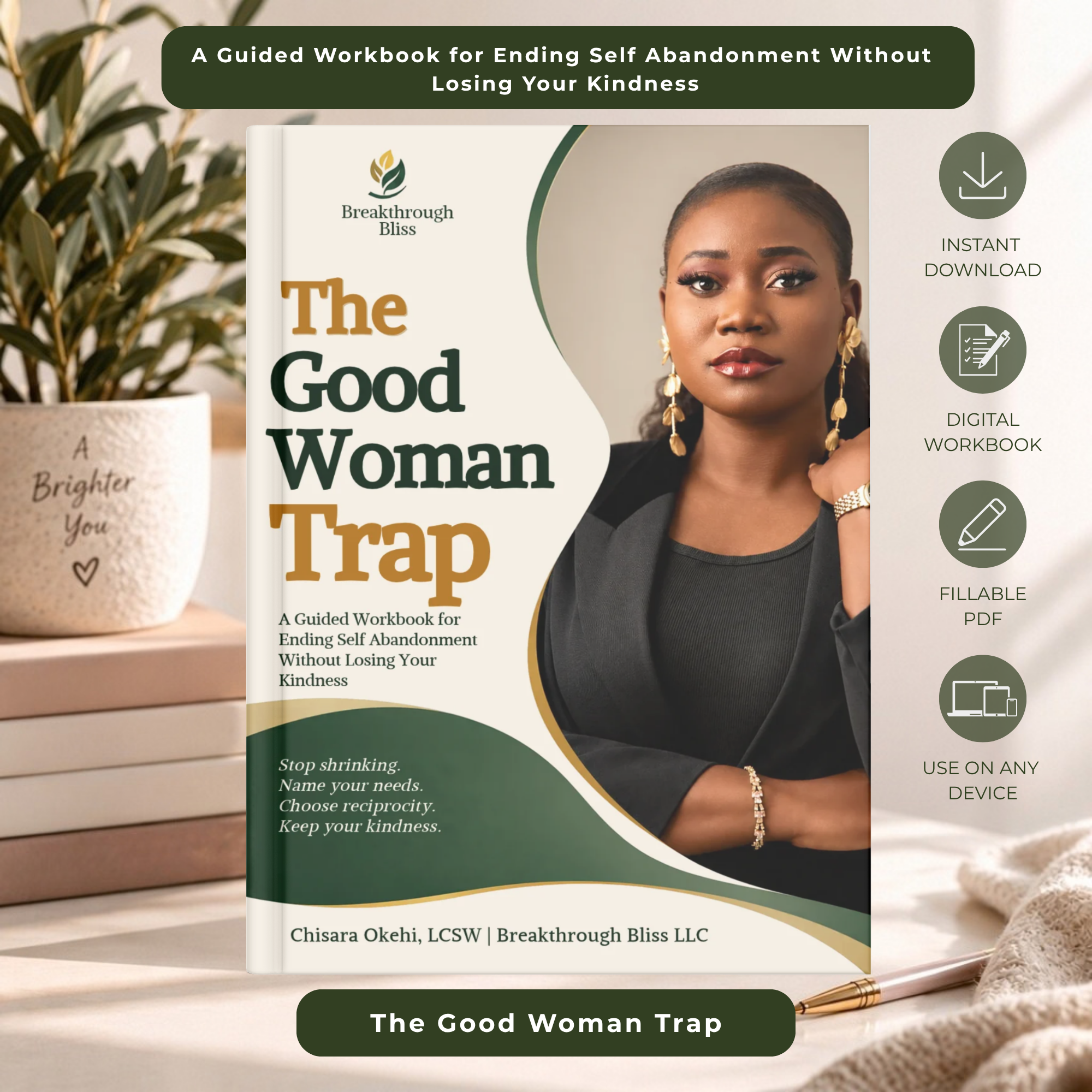 Image 1 of 9
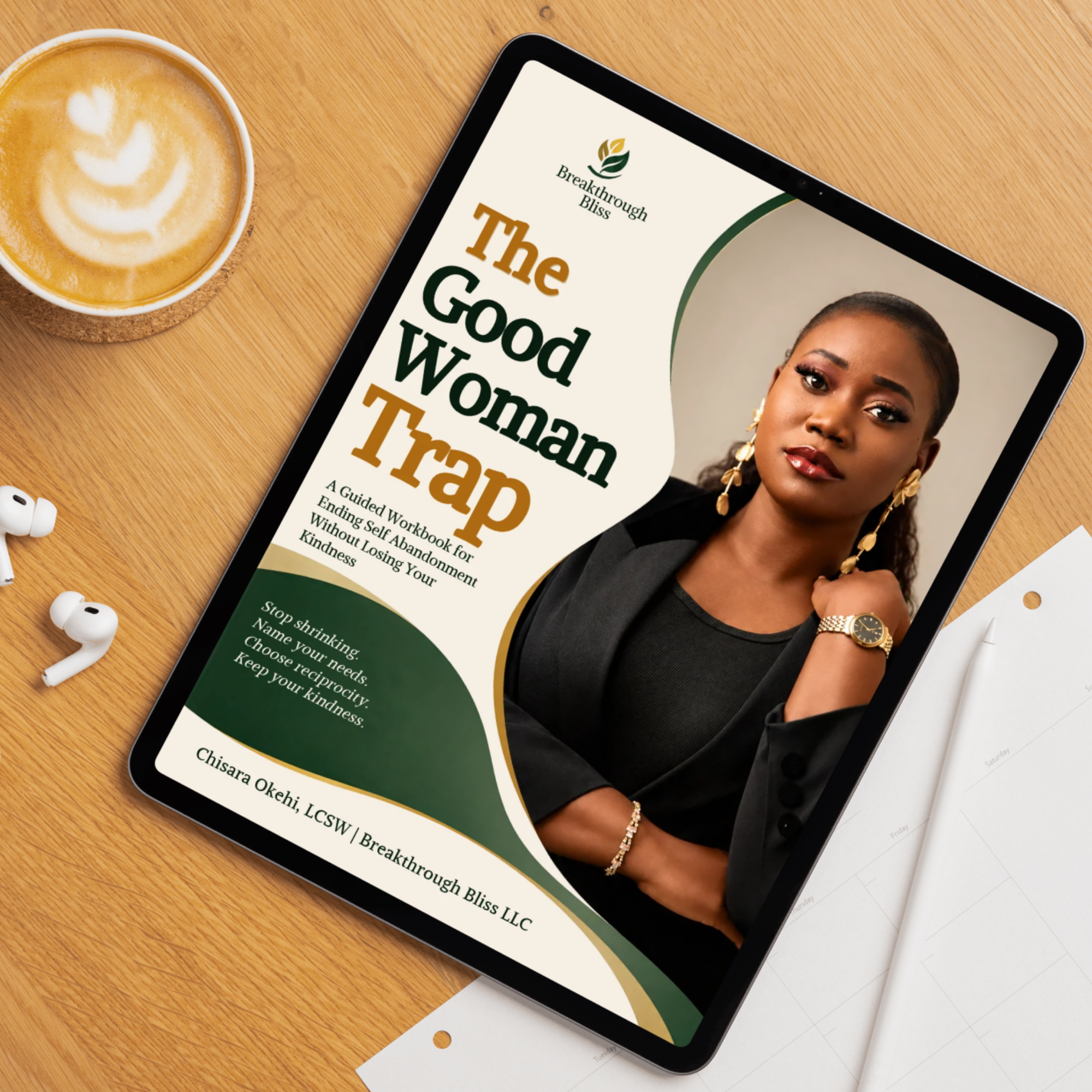 Image 2 of 9
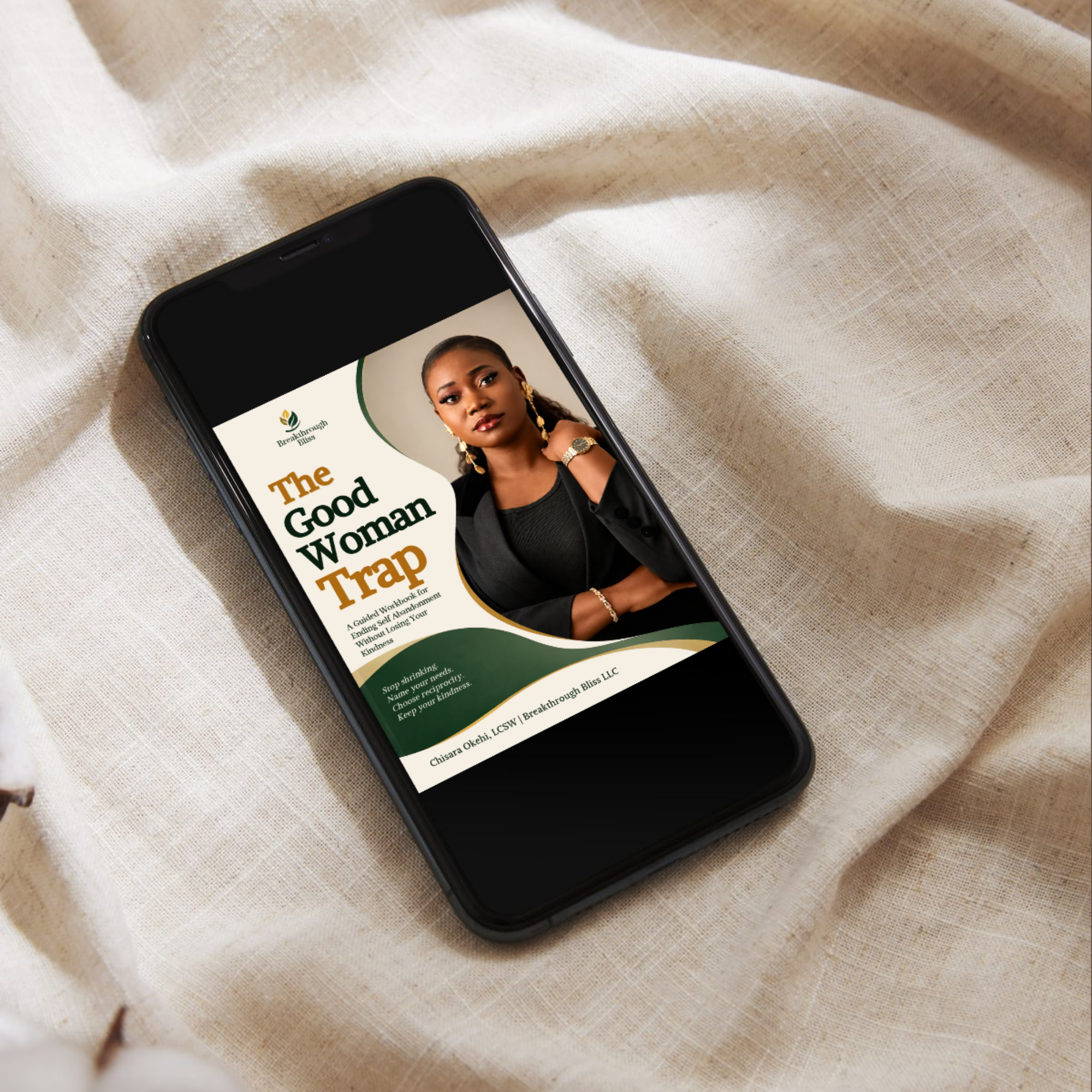 Image 3 of 9
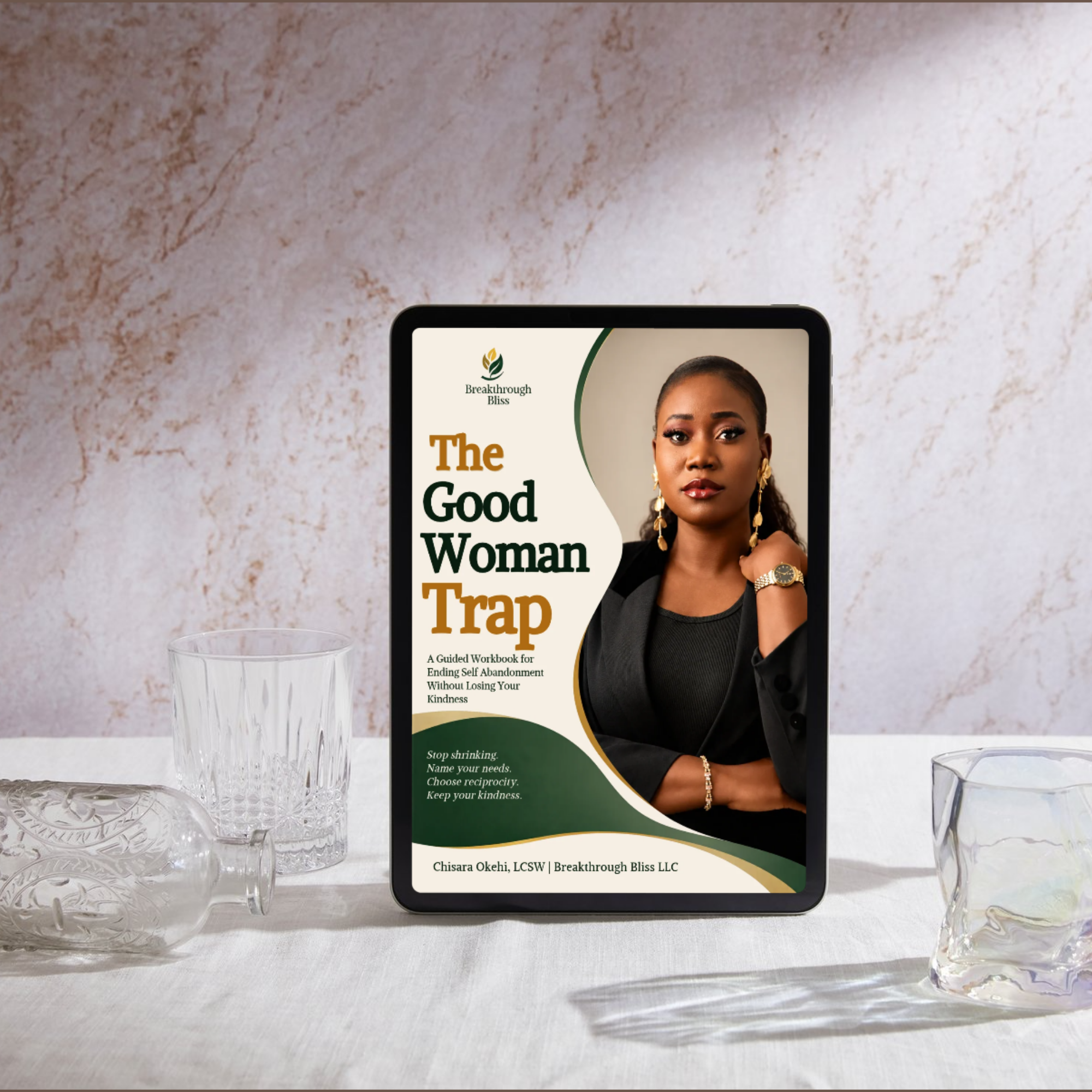 Image 4 of 9
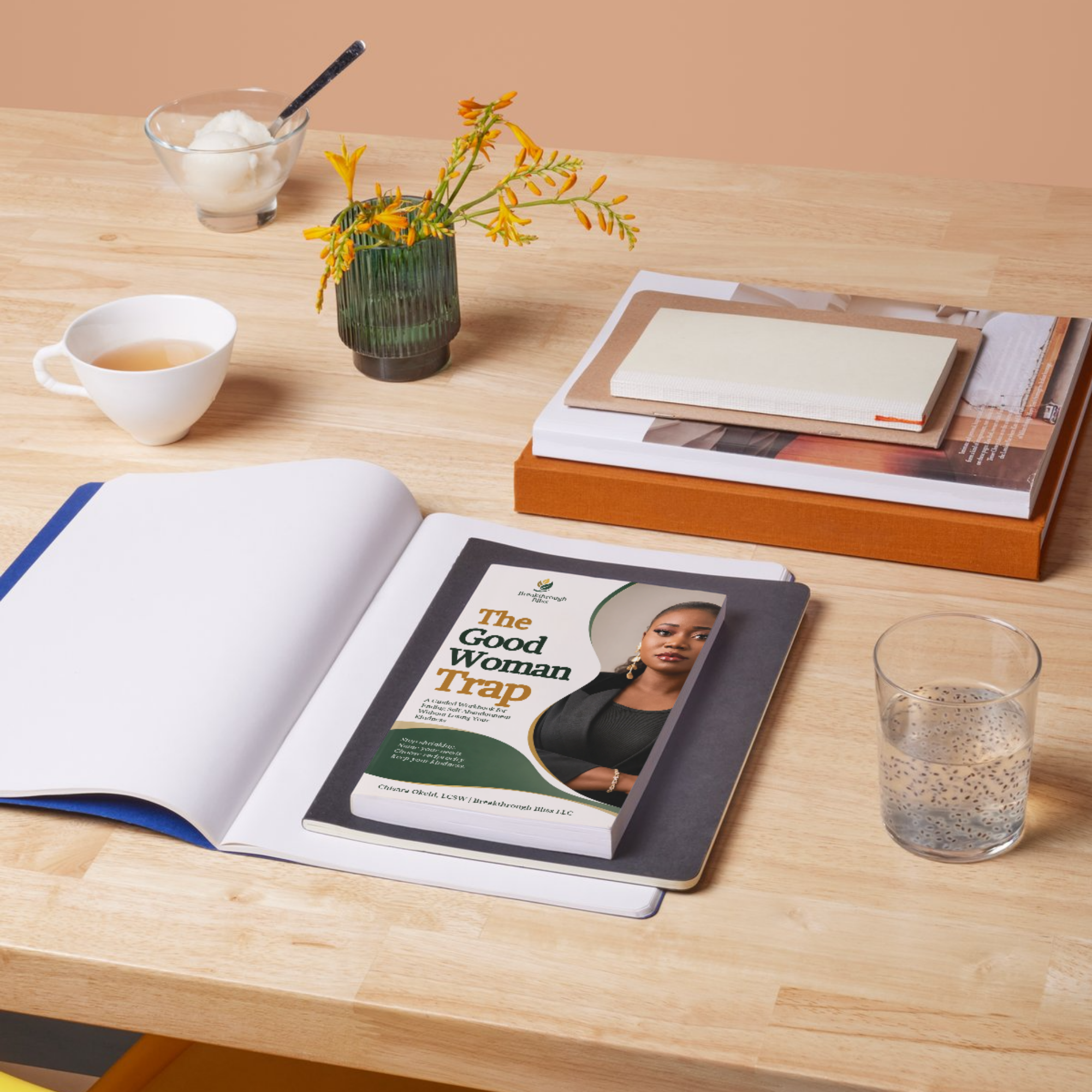 Image 5 of 9
 Image 6 of 9
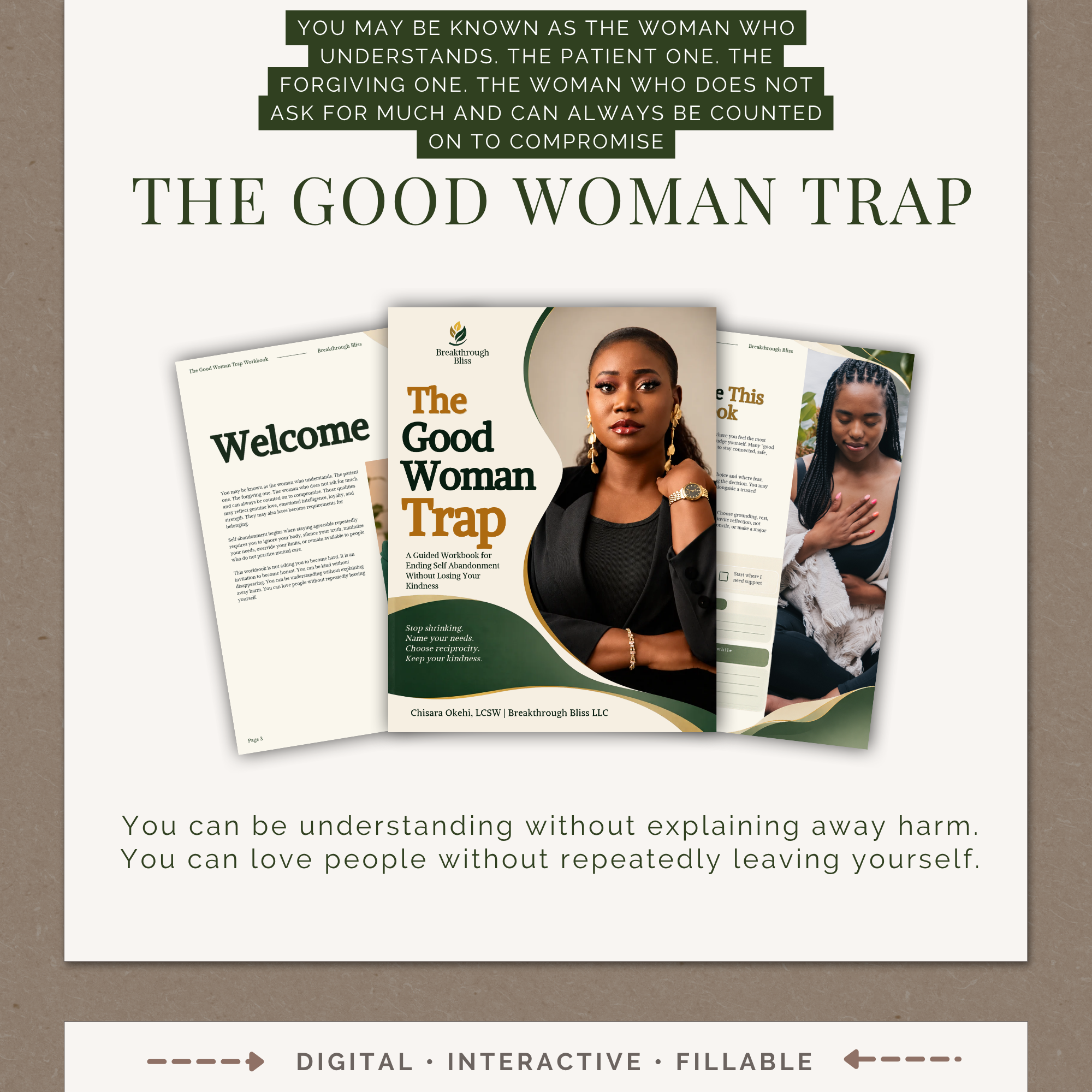 Image 7 of 9
 Image 8 of 9
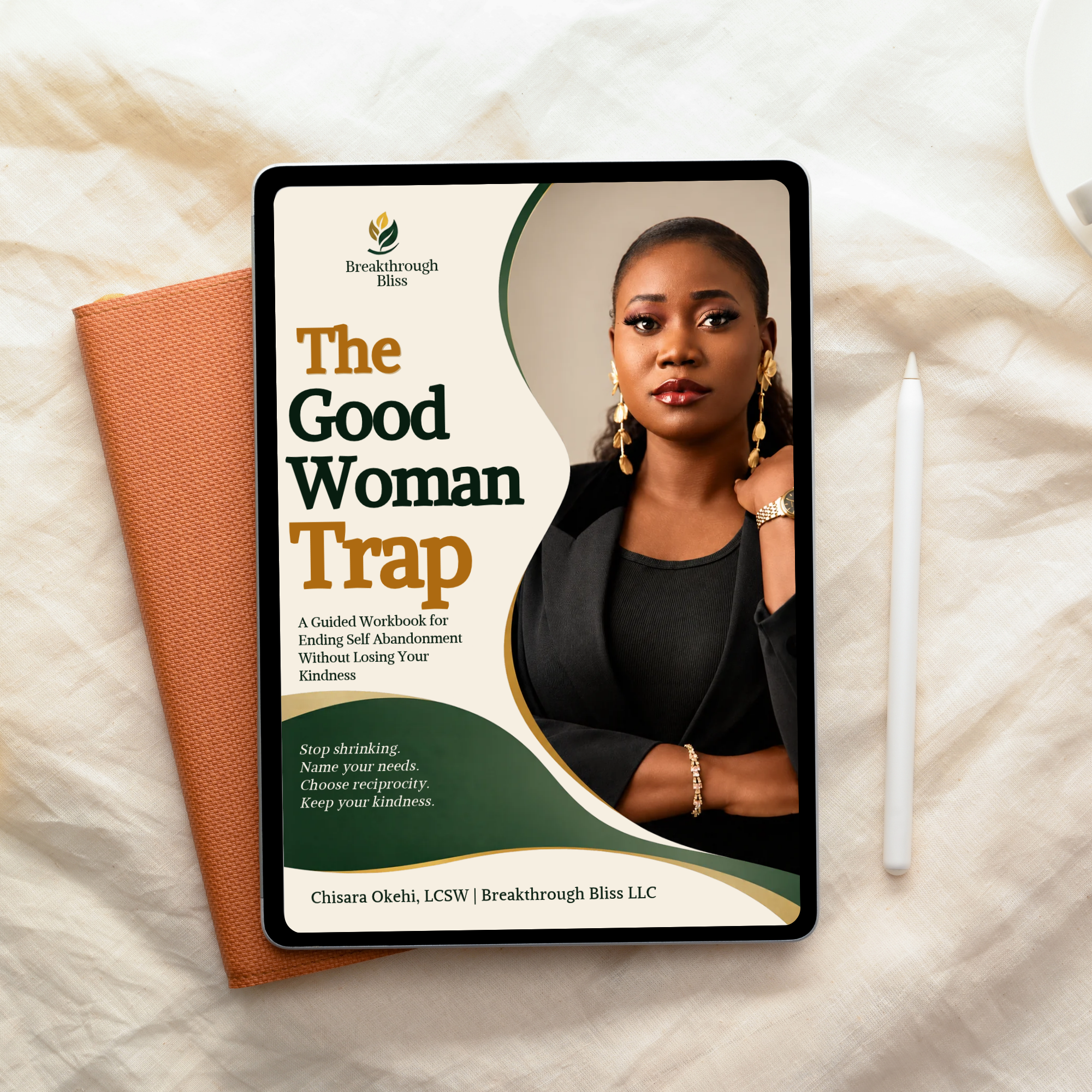 Image 9 of 9