For many women, especially those shaped by trauma, responsibility, and chronic stress, joy can feel unfamiliar or even unsafe. Survival teaches the nervous system to stay alert, guarded, and prepared for threat. Pleasure becomes secondary. Happiness feels distant.
The Joy Reclamation Guide was created to help you slowly and safely reclaim joy as part of your healing.
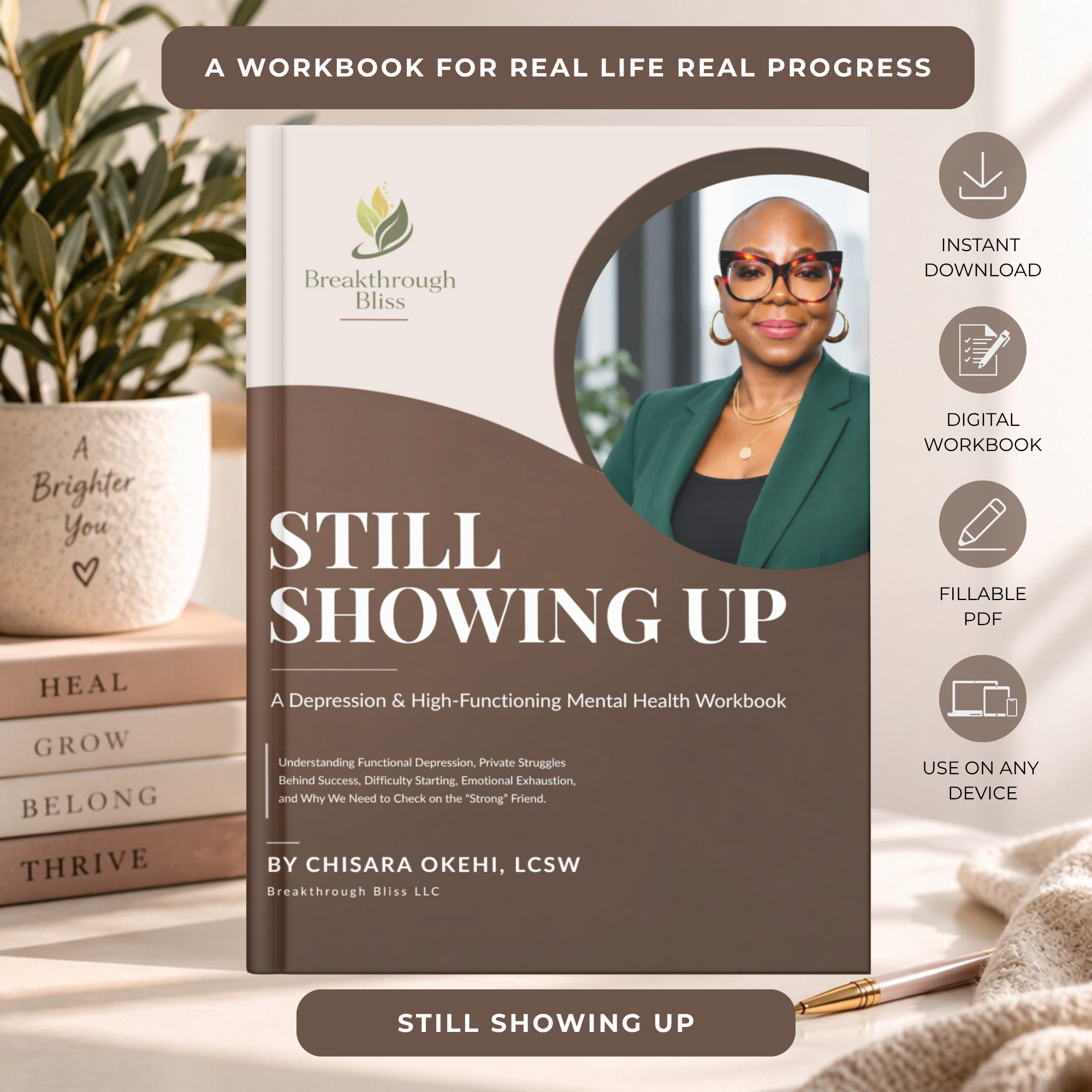
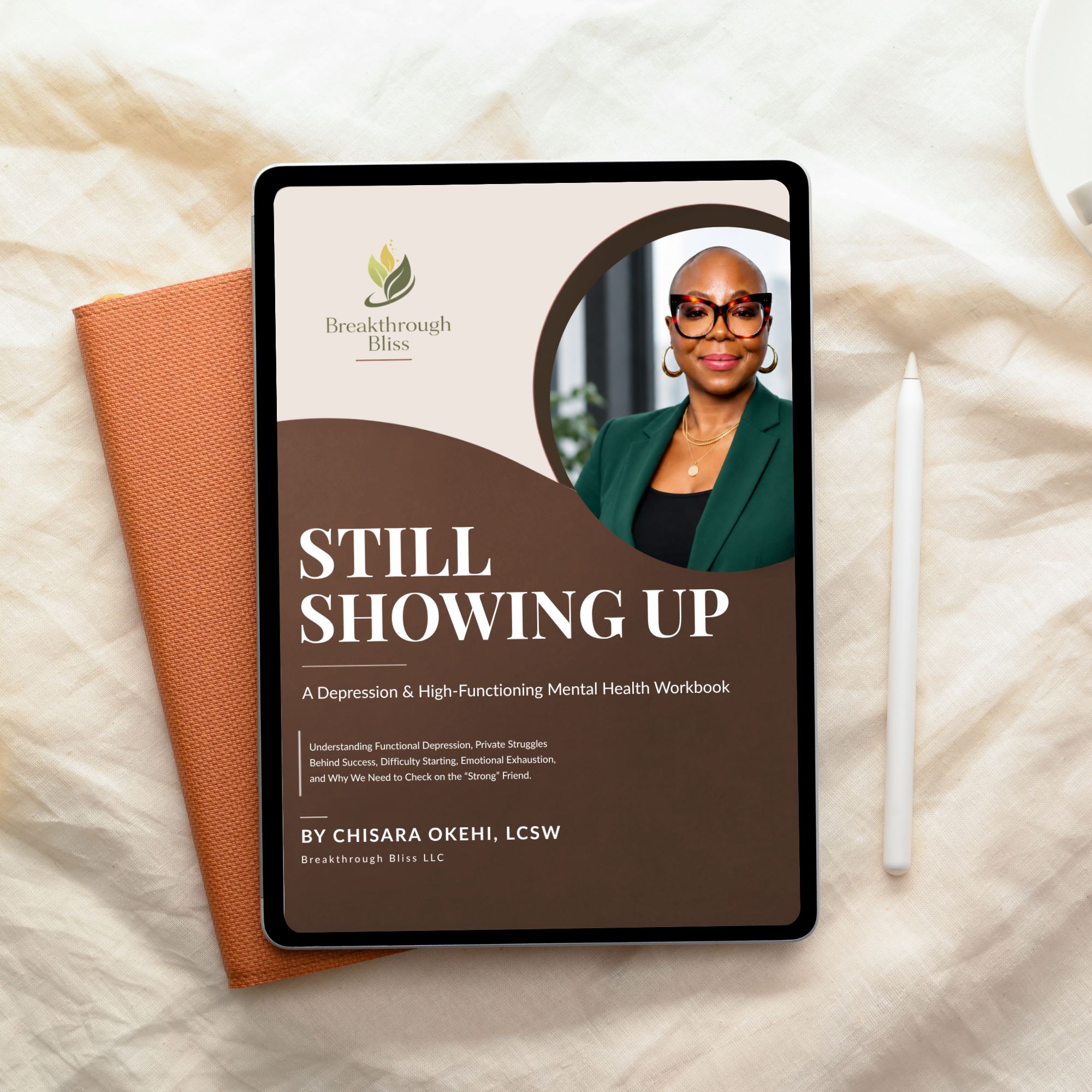
Written by Chisara Okehi, LCSW, a licensed clinical social worker, emotional wellness coach, and founder of Breakthrough Bliss LLC, this workbook integrates trauma-informed neuroscience, nervous system regulation, and reflective practices. With over 15 years of experience supporting women through complex trauma, grief, and emotional exhaustion, Chisara reframes joy not as indulgence, but as resilience and repair.
This workbook does not force positivity.
It teaches your body that joy is safe again.
What You’ll Work Through Inside
✔ An accessible explanation of the science of joy, including how joy activates dopamine and oxytocin and supports emotional regulation (page 4)
✔ Education on how trauma trains the nervous system to expect threat over pleasure
✔ Somatic grounding practices to help your body receive joy safely (page 5)
✔ Gentle movement, nature, and play-based exercises to reintroduce pleasure
✔ Reflective journaling prompts that reconnect you with laughter, curiosity, and childhood joy (page 6)
✔ Intentional joy practices such as a Joy Jar, Joy Calendar, playlist creation, and mirror rituals (page 7)
✔ A 7-Day Joy Tracker to help you notice how joy feels in your body and daily life (page 8)
✔ Affirmations that reinforce permission, worthiness, and delight (page 9)
✔ A final empowerment reflection reminding you that joy is resistance, healing, and self-honoring (page 10)
Each section is designed to move gently, honoring nervous system safety and emotional pacing.
Who This Workbook Is For
This workbook is for women who:
• Feel emotionally exhausted or disconnected from joy
• Learned to prioritize survival, responsibility, and strength
• Struggle to rest or experience pleasure without guilt
• Want joy that feels embodied, not forced
• Are healing from trauma, burnout, or chronic stress
• Desire happiness that is sustainable and self-directed
What Makes This Workbook Different
This is not a “think positive” guide.
The Joy Reclamation Guide is grounded in trauma-informed clinical care and neuroscience. It recognizes that joy must be felt in the body, not just understood intellectually. The tone is gentle, validating, and culturally aware, with no pressure to bypass pain or perform happiness.
Format and Access
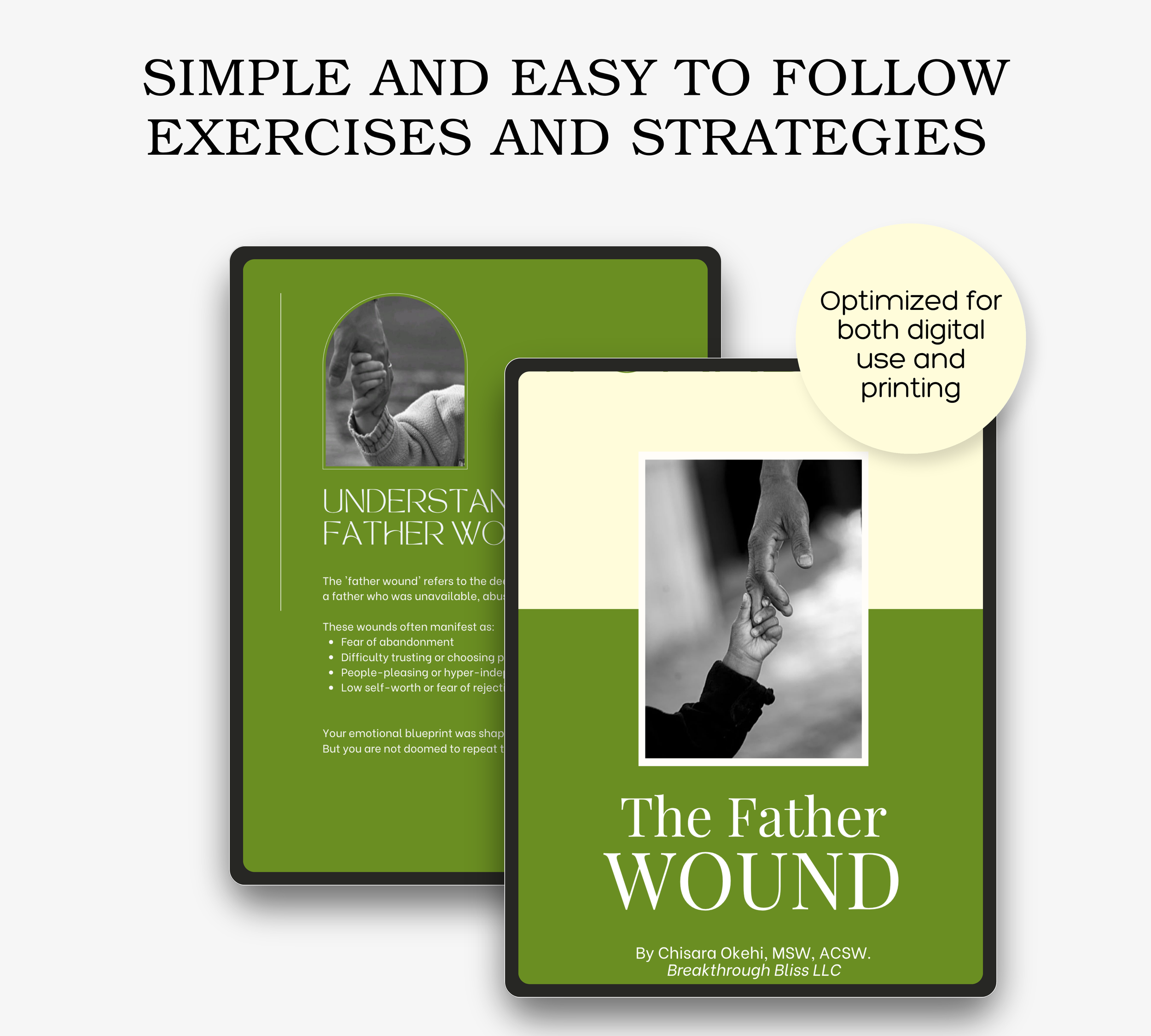
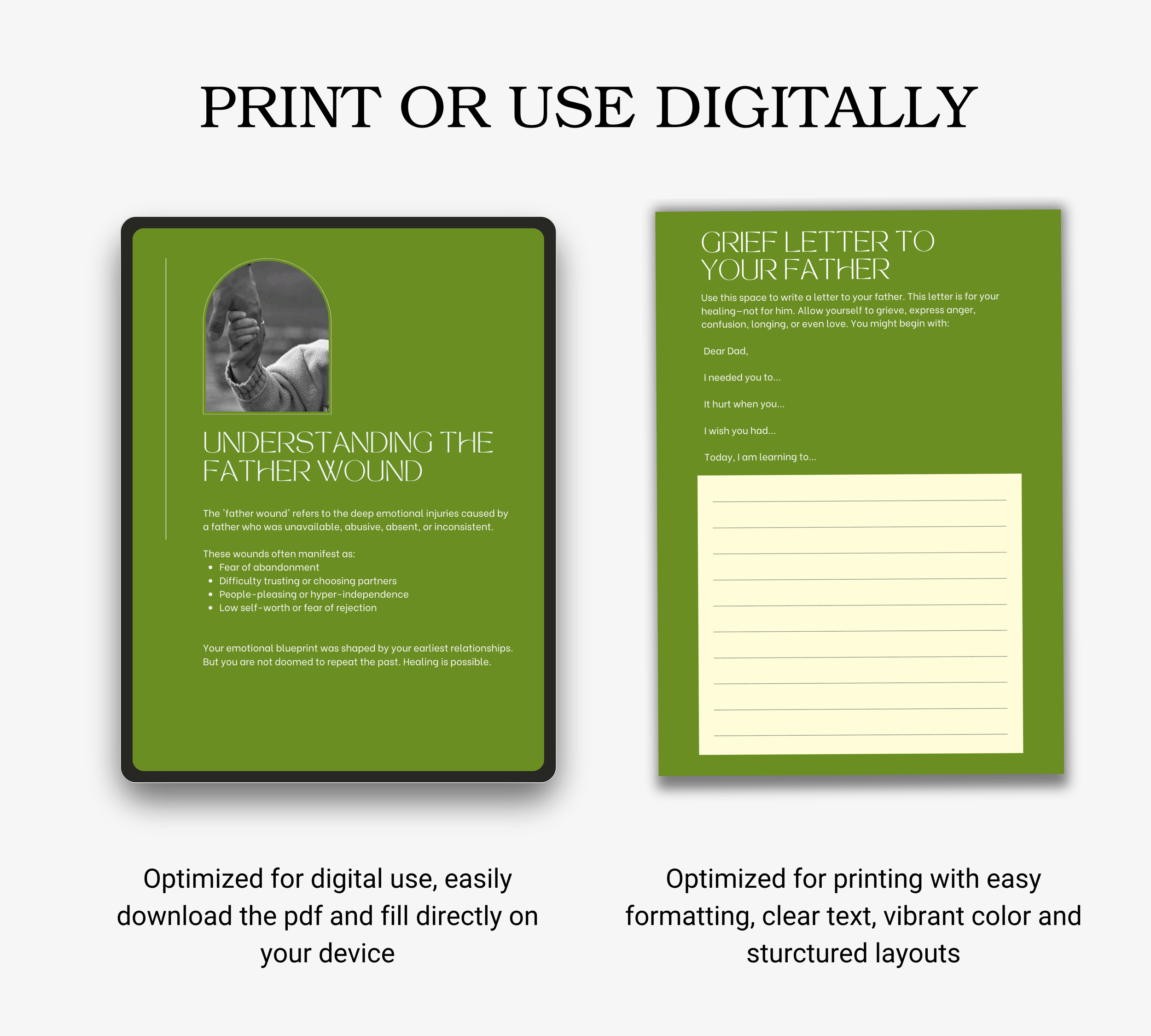
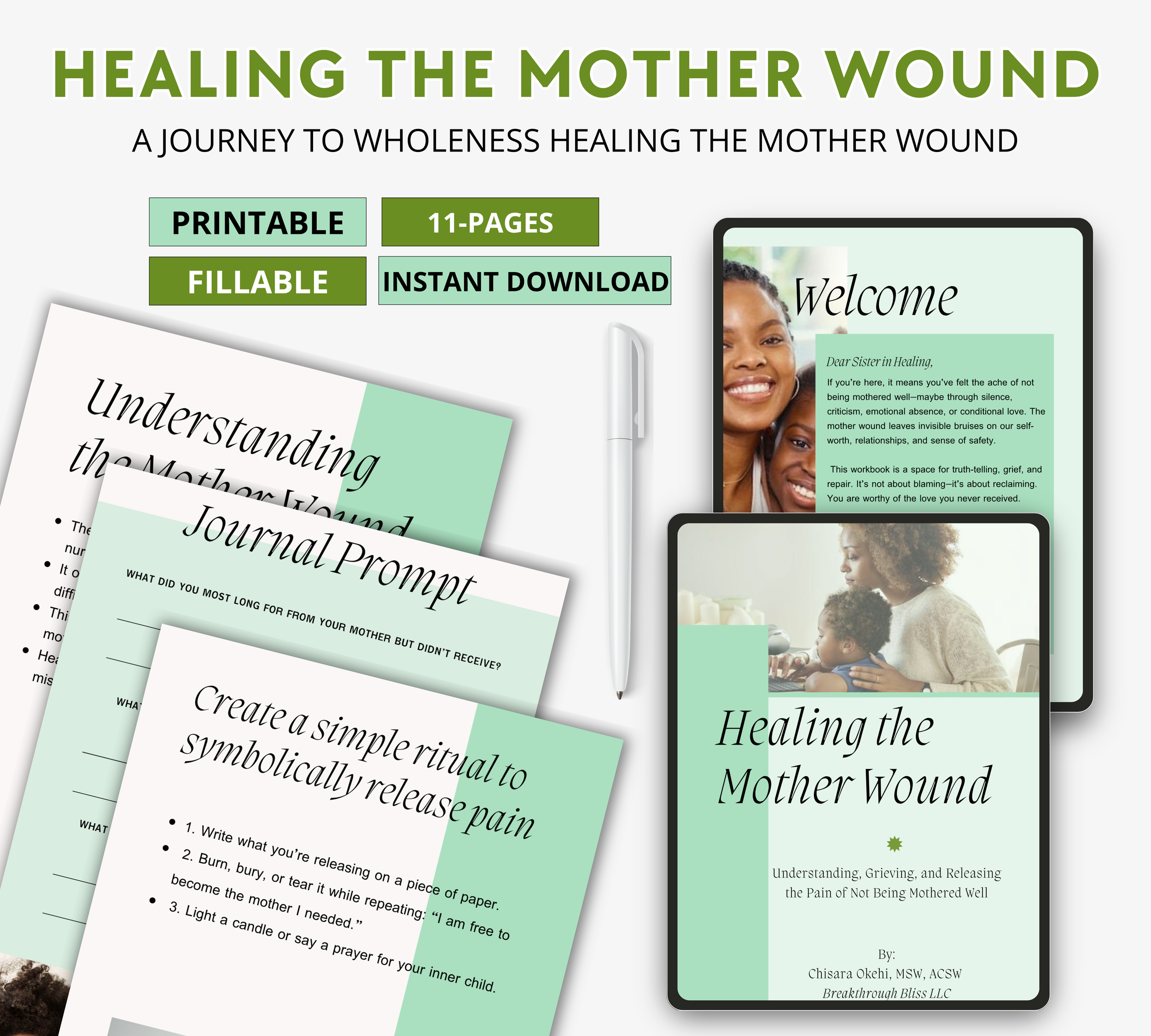
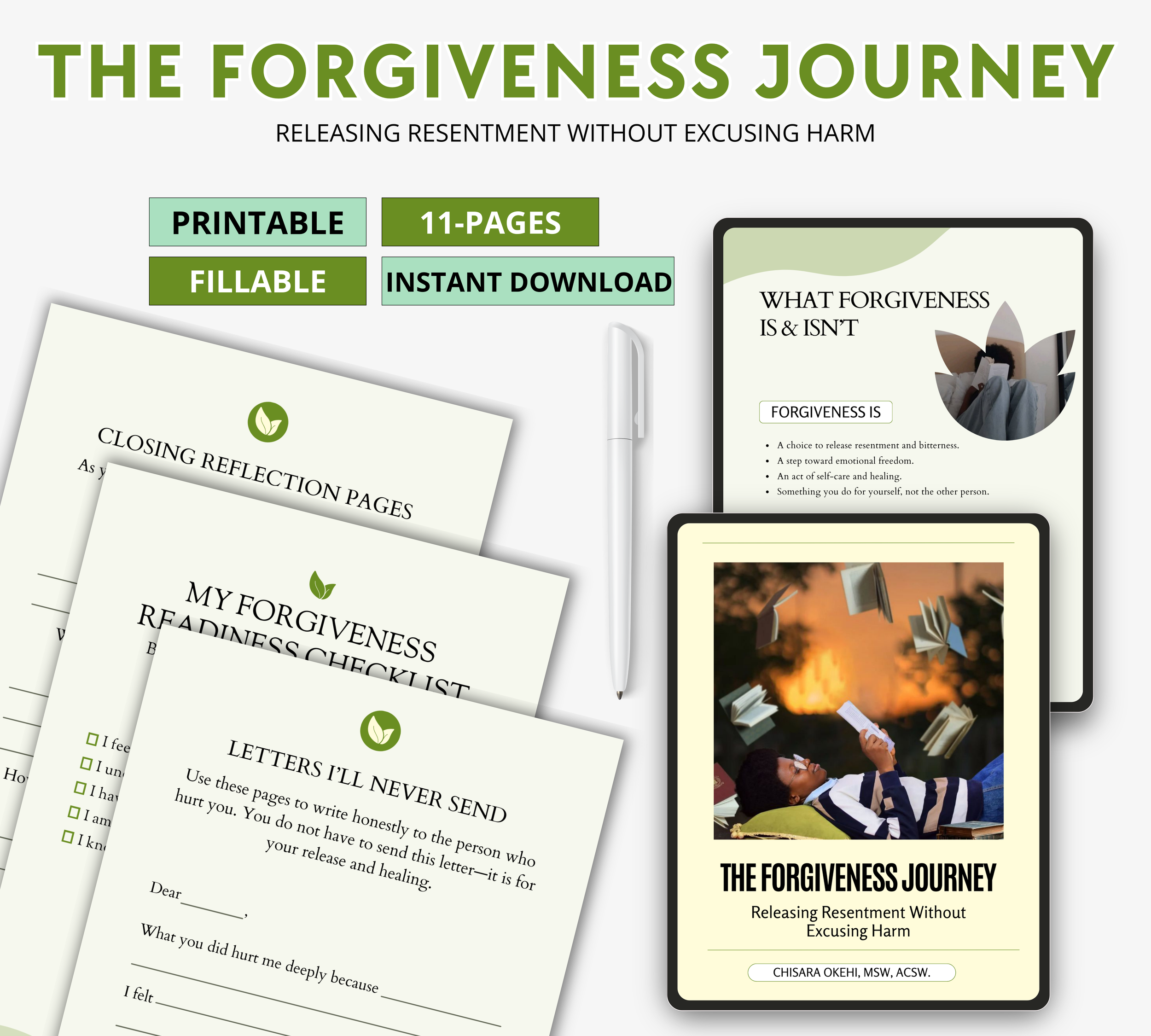
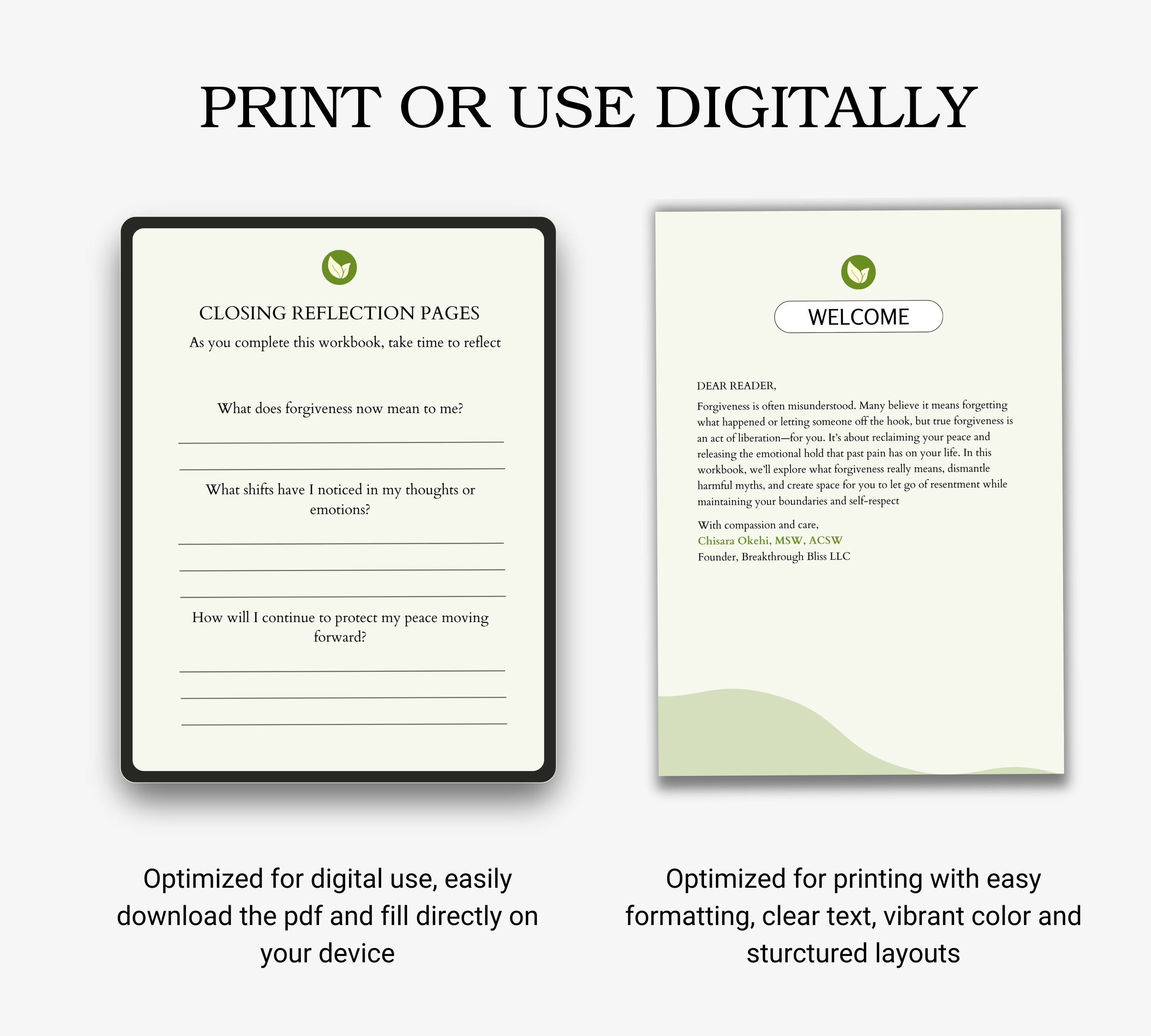
• Digital fillable PDF workbook
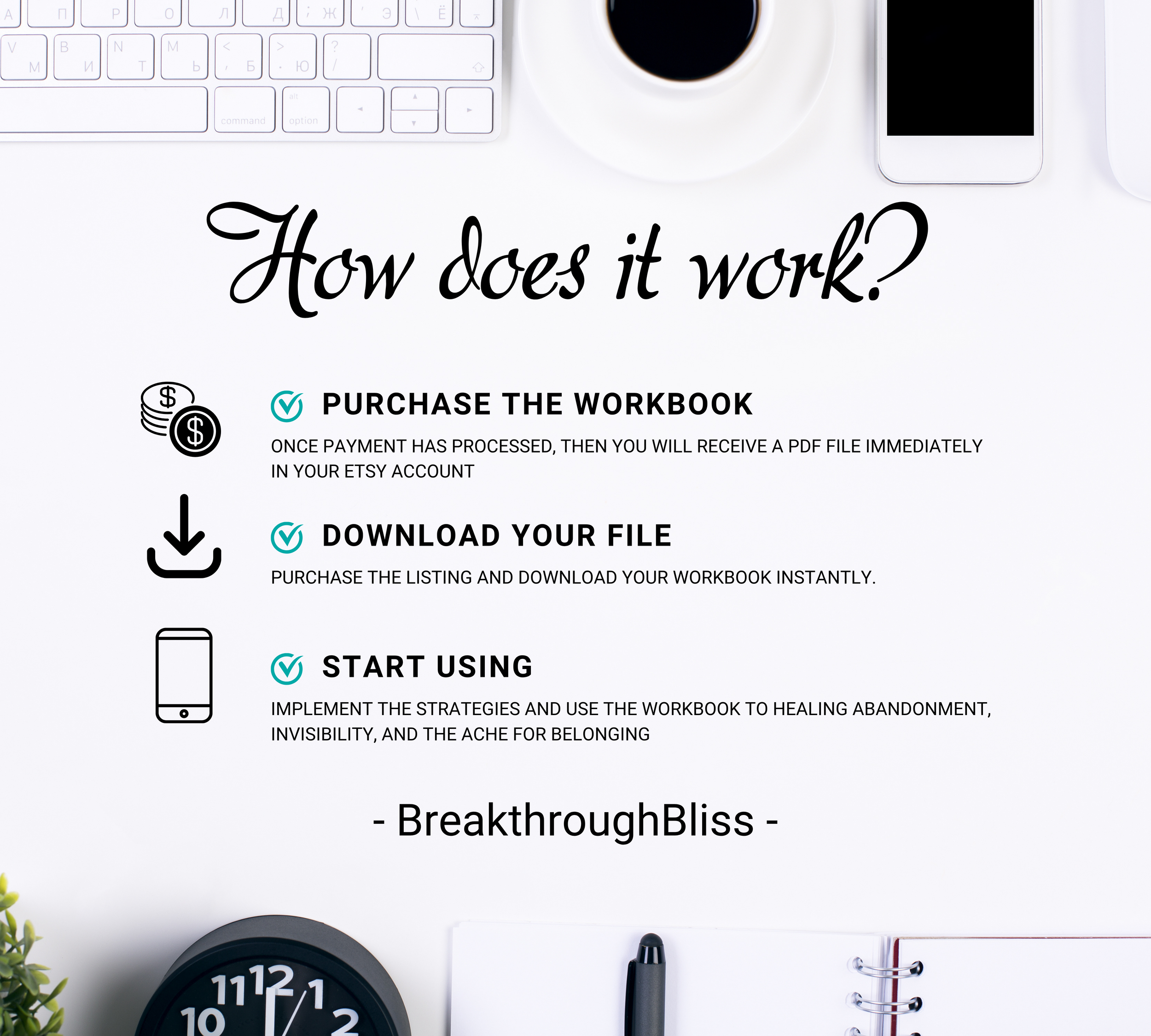
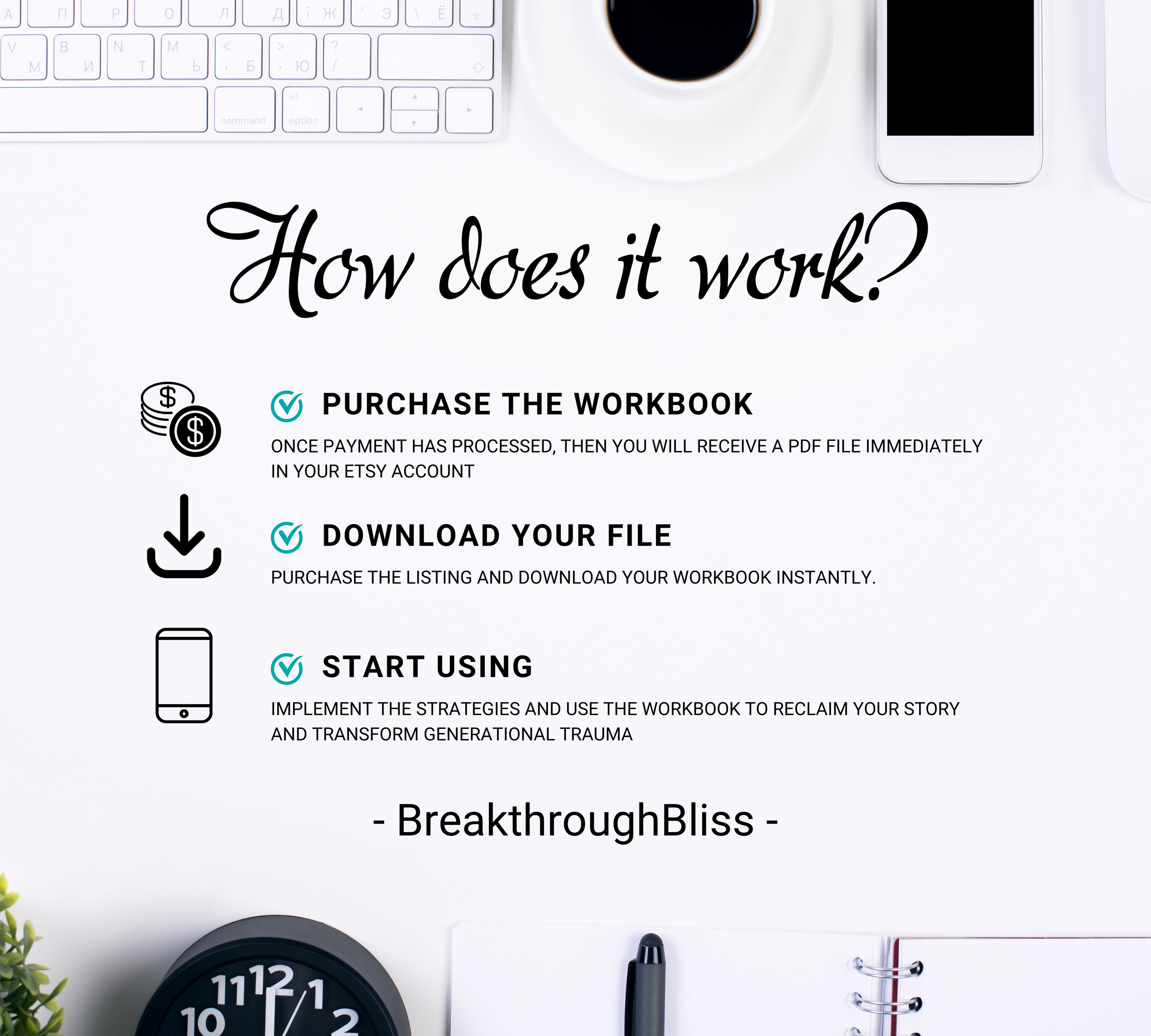
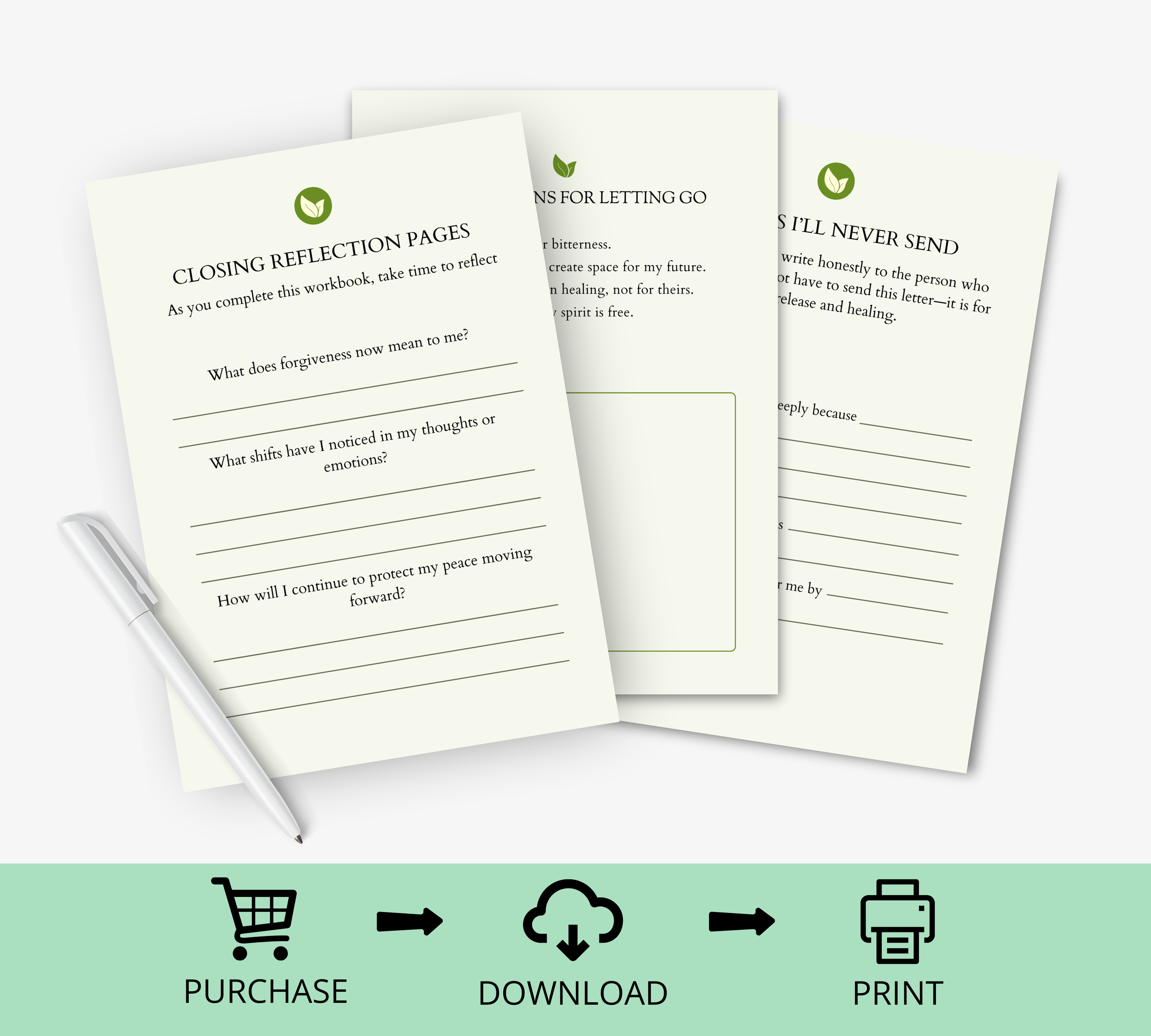
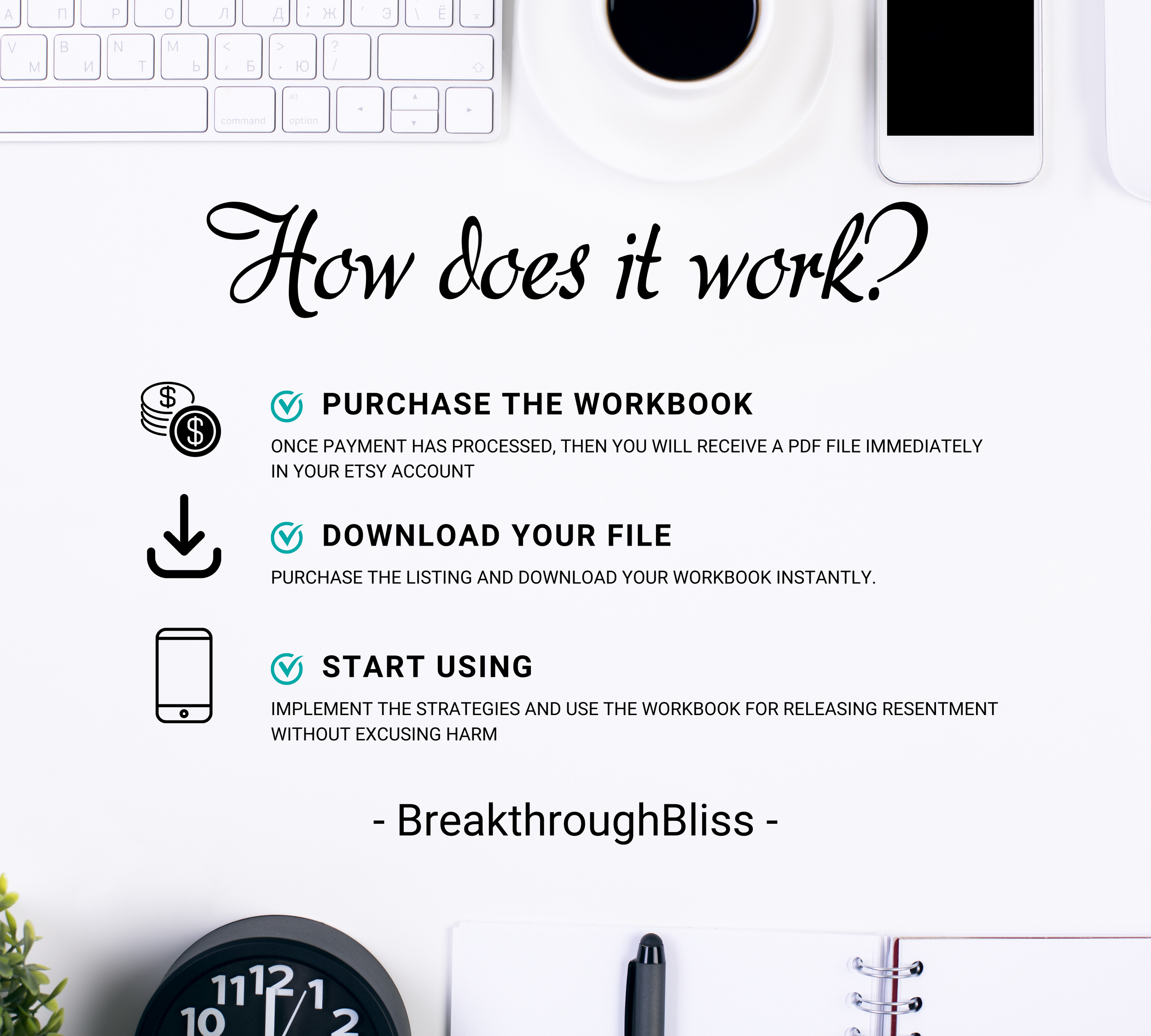
• Immediate download after purchase
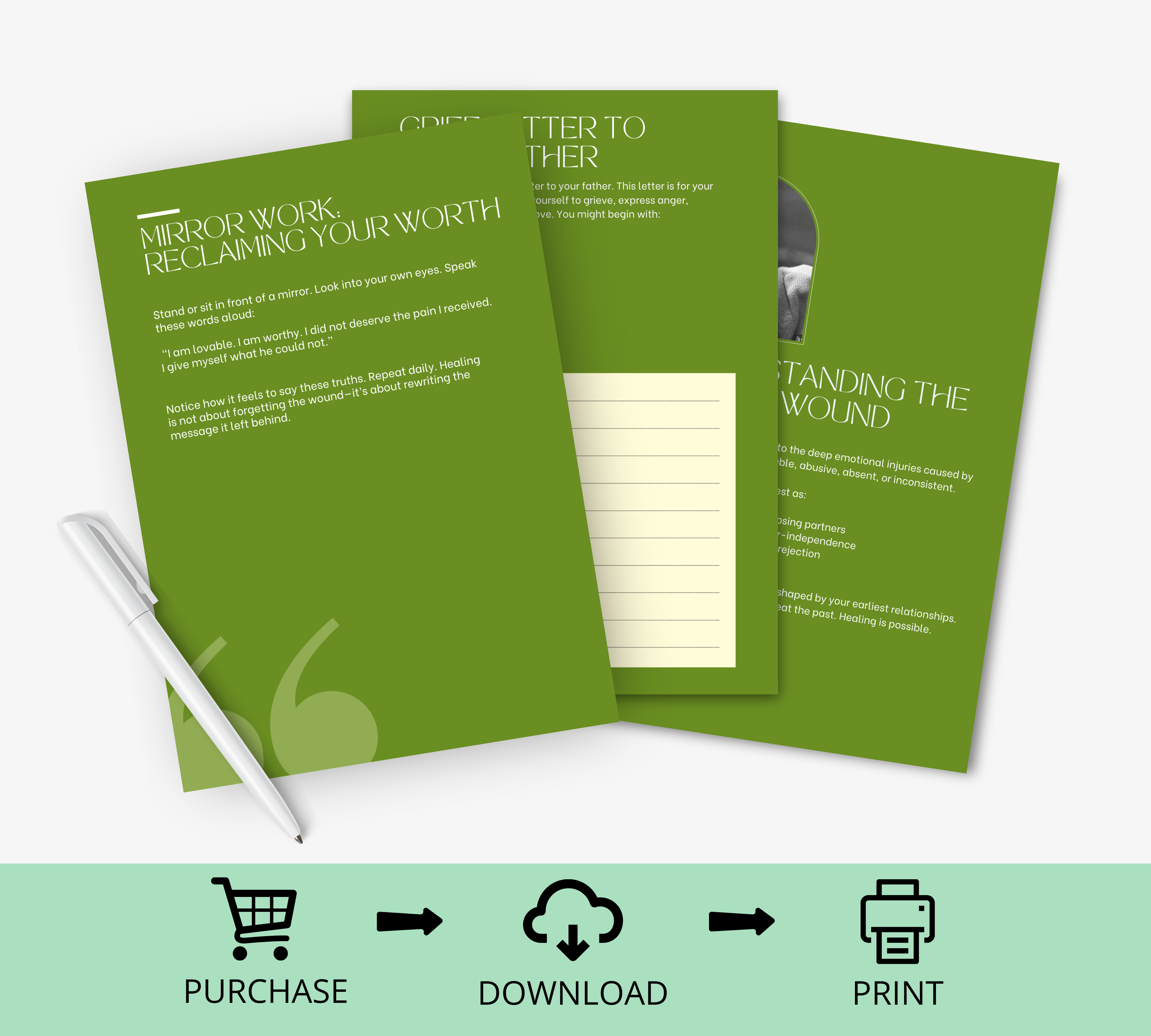
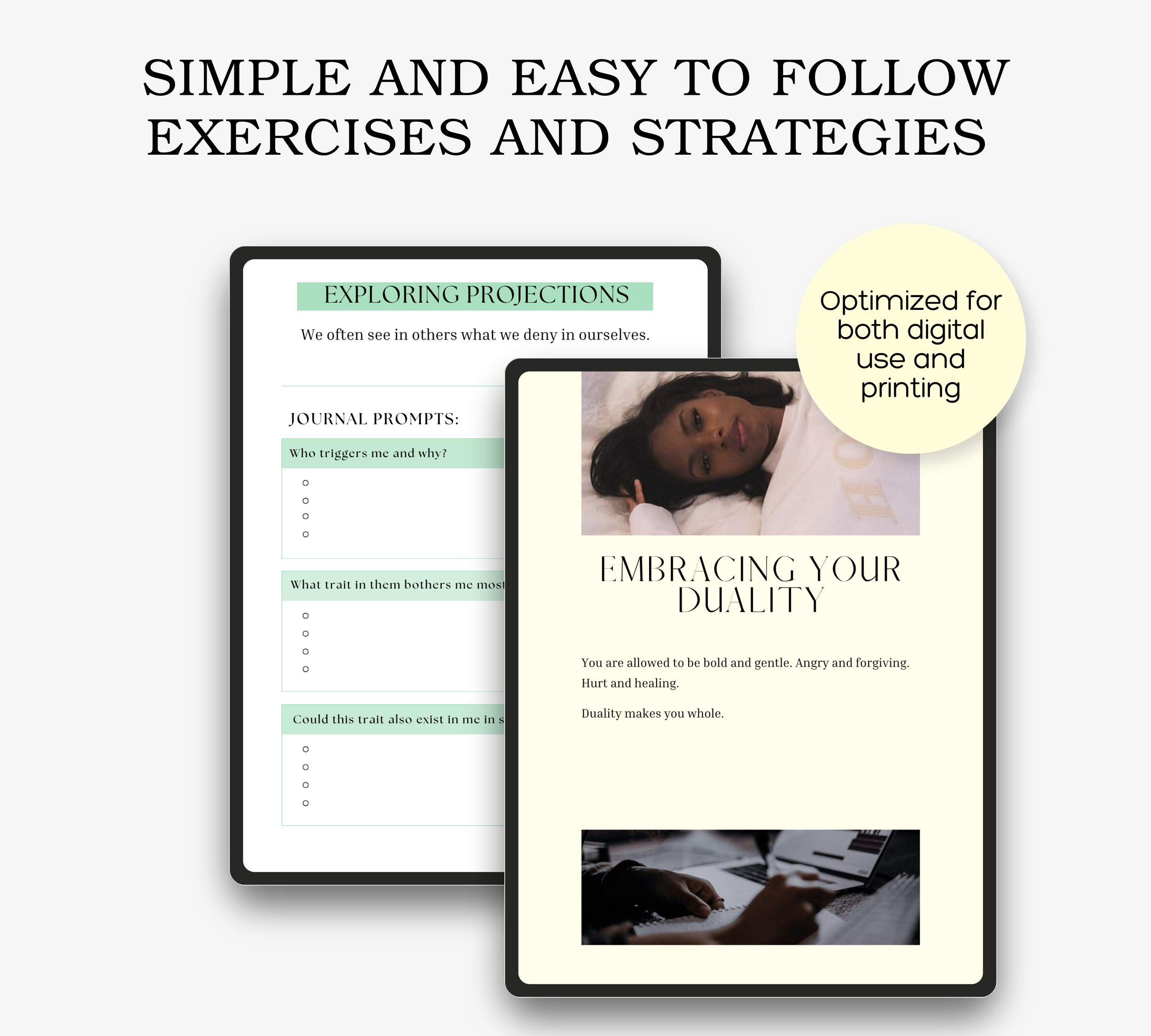
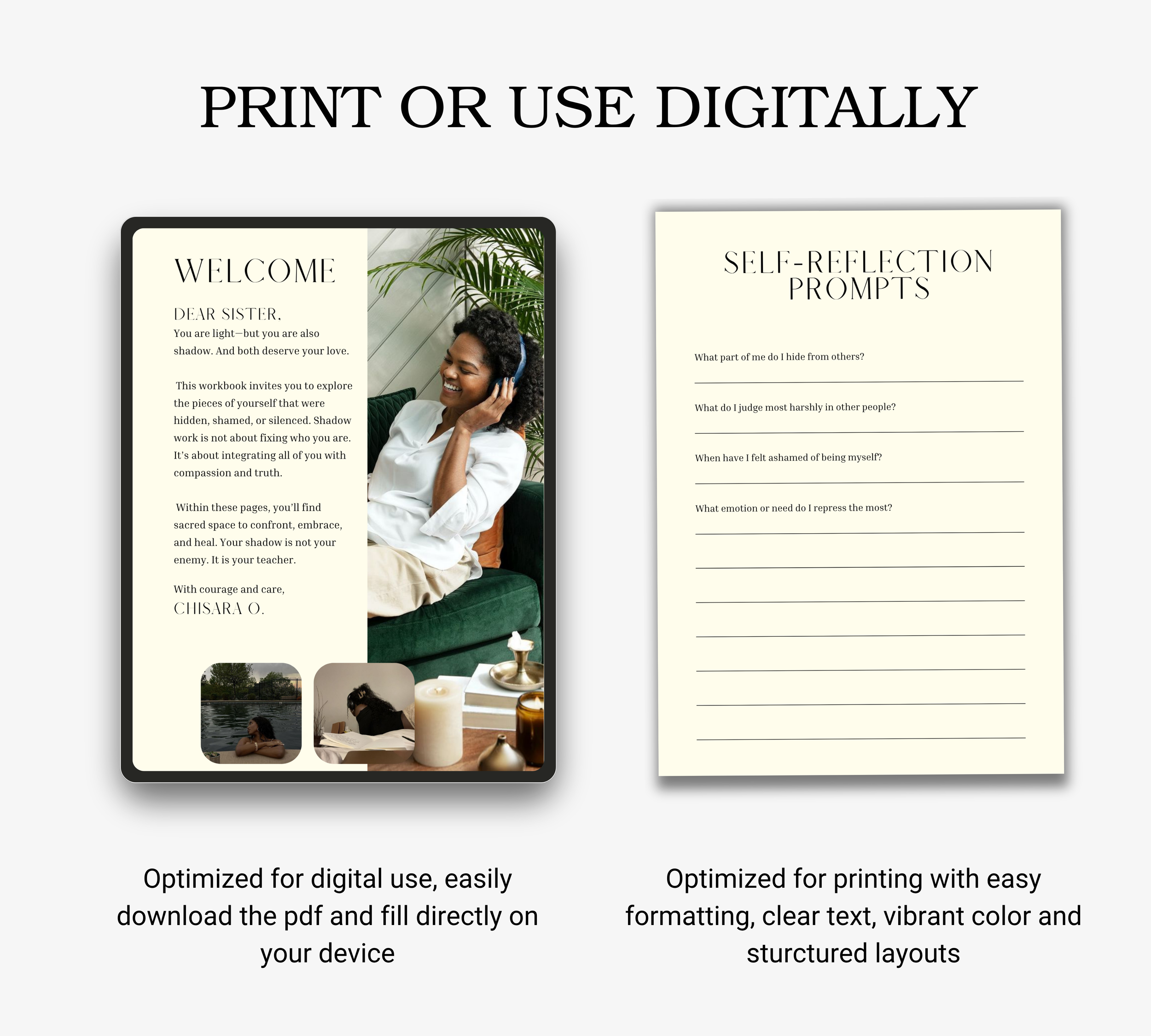
• Printable or usable on your device
• 11 thoughtfully designed pages
• Can be used independently or alongside therapy or coaching
For many women, especially those shaped by trauma, responsibility, and chronic stress, joy can feel unfamiliar or even unsafe. Survival teaches the nervous system to stay alert, guarded, and prepared for threat. Pleasure becomes secondary. Happiness feels distant.
The Joy Reclamation Guide was created to help you slowly and safely reclaim joy as part of your healing.
Written by Chisara Okehi, LCSW, a licensed clinical social worker, emotional wellness coach, and founder of Breakthrough Bliss LLC, this workbook integrates trauma-informed neuroscience, nervous system regulation, and reflective practices. With over 15 years of experience supporting women through complex trauma, grief, and emotional exhaustion, Chisara reframes joy not as indulgence, but as resilience and repair.
This workbook does not force positivity.
It teaches your body that joy is safe again.
What You’ll Work Through Inside
✔ An accessible explanation of the science of joy, including how joy activates dopamine and oxytocin and supports emotional regulation (page 4)
✔ Education on how trauma trains the nervous system to expect threat over pleasure
✔ Somatic grounding practices to help your body receive joy safely (page 5)
✔ Gentle movement, nature, and play-based exercises to reintroduce pleasure
✔ Reflective journaling prompts that reconnect you with laughter, curiosity, and childhood joy (page 6)
✔ Intentional joy practices such as a Joy Jar, Joy Calendar, playlist creation, and mirror rituals (page 7)
✔ A 7-Day Joy Tracker to help you notice how joy feels in your body and daily life (page 8)
✔ Affirmations that reinforce permission, worthiness, and delight (page 9)
✔ A final empowerment reflection reminding you that joy is resistance, healing, and self-honoring (page 10)
Each section is designed to move gently, honoring nervous system safety and emotional pacing.
Who This Workbook Is For
This workbook is for women who:
• Feel emotionally exhausted or disconnected from joy
• Learned to prioritize survival, responsibility, and strength
• Struggle to rest or experience pleasure without guilt
• Want joy that feels embodied, not forced
• Are healing from trauma, burnout, or chronic stress
• Desire happiness that is sustainable and self-directed
What Makes This Workbook Different
This is not a “think positive” guide.
The Joy Reclamation Guide is grounded in trauma-informed clinical care and neuroscience. It recognizes that joy must be felt in the body, not just understood intellectually. The tone is gentle, validating, and culturally aware, with no pressure to bypass pain or perform happiness.
Format and Access
• Digital fillable PDF workbook
• Immediate download after purchase
• Printable or usable on your device
• 11 thoughtfully designed pages
• Can be used independently or alongside therapy or coaching

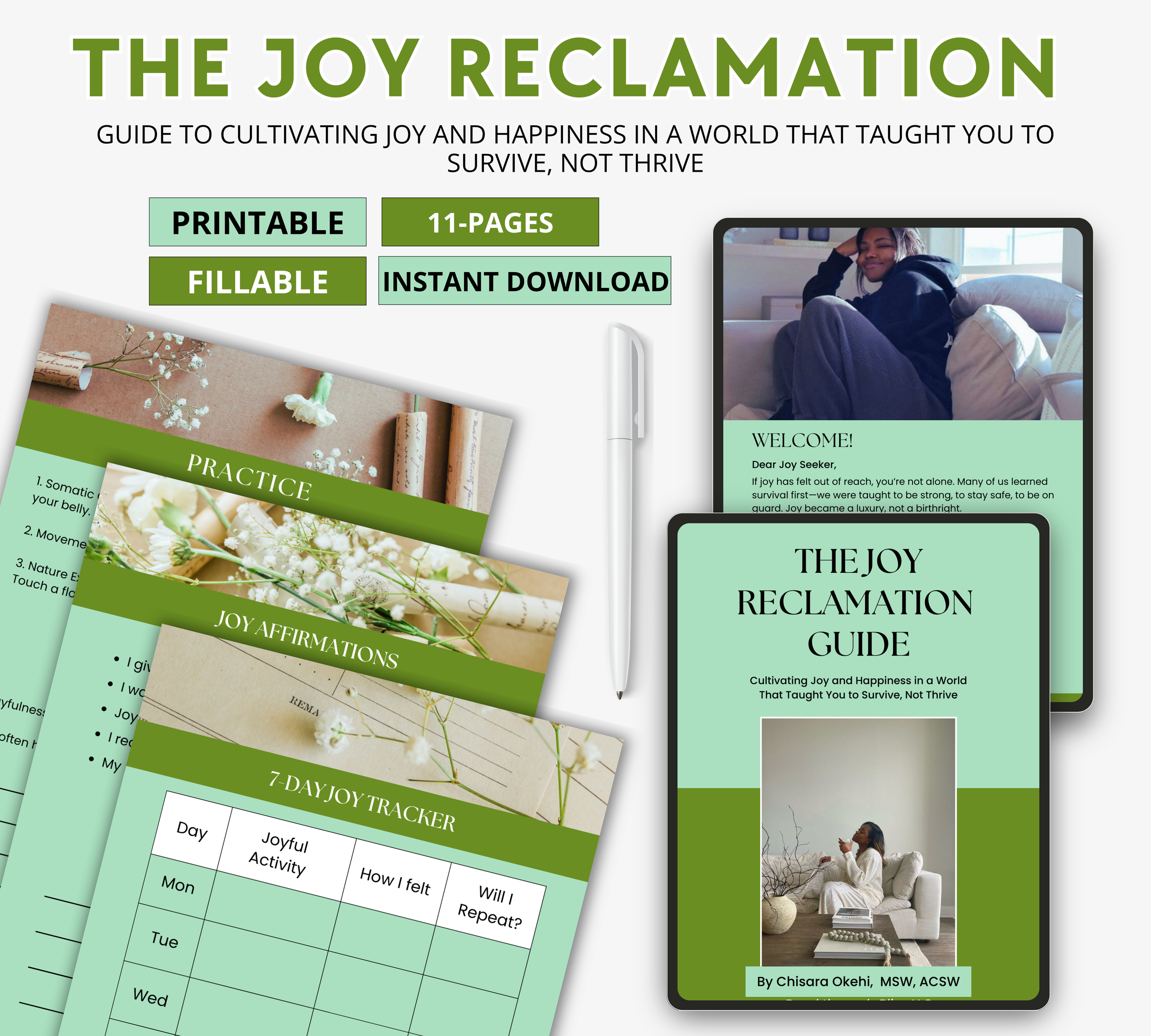 Image 1 of 8
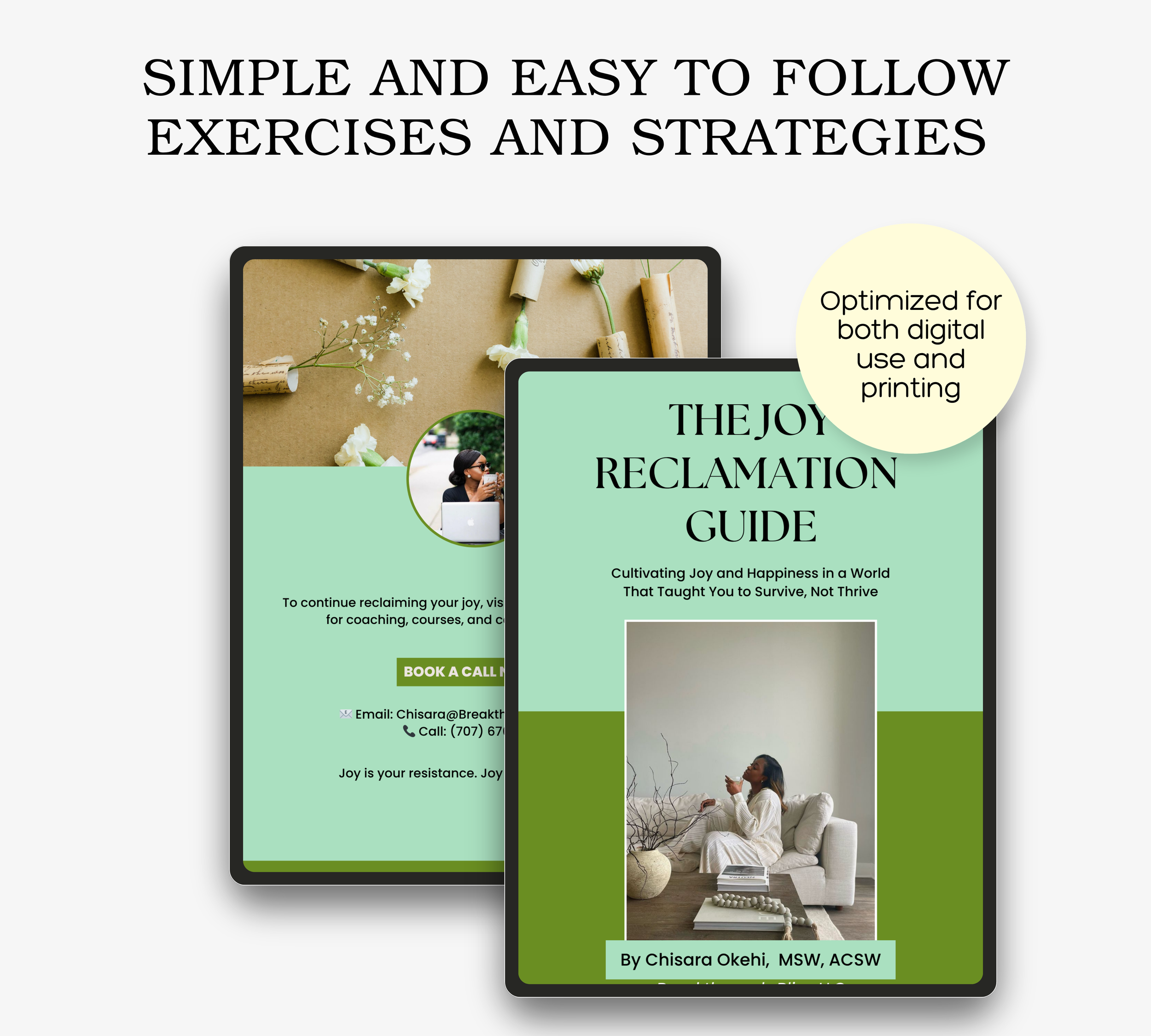 Image 2 of 8
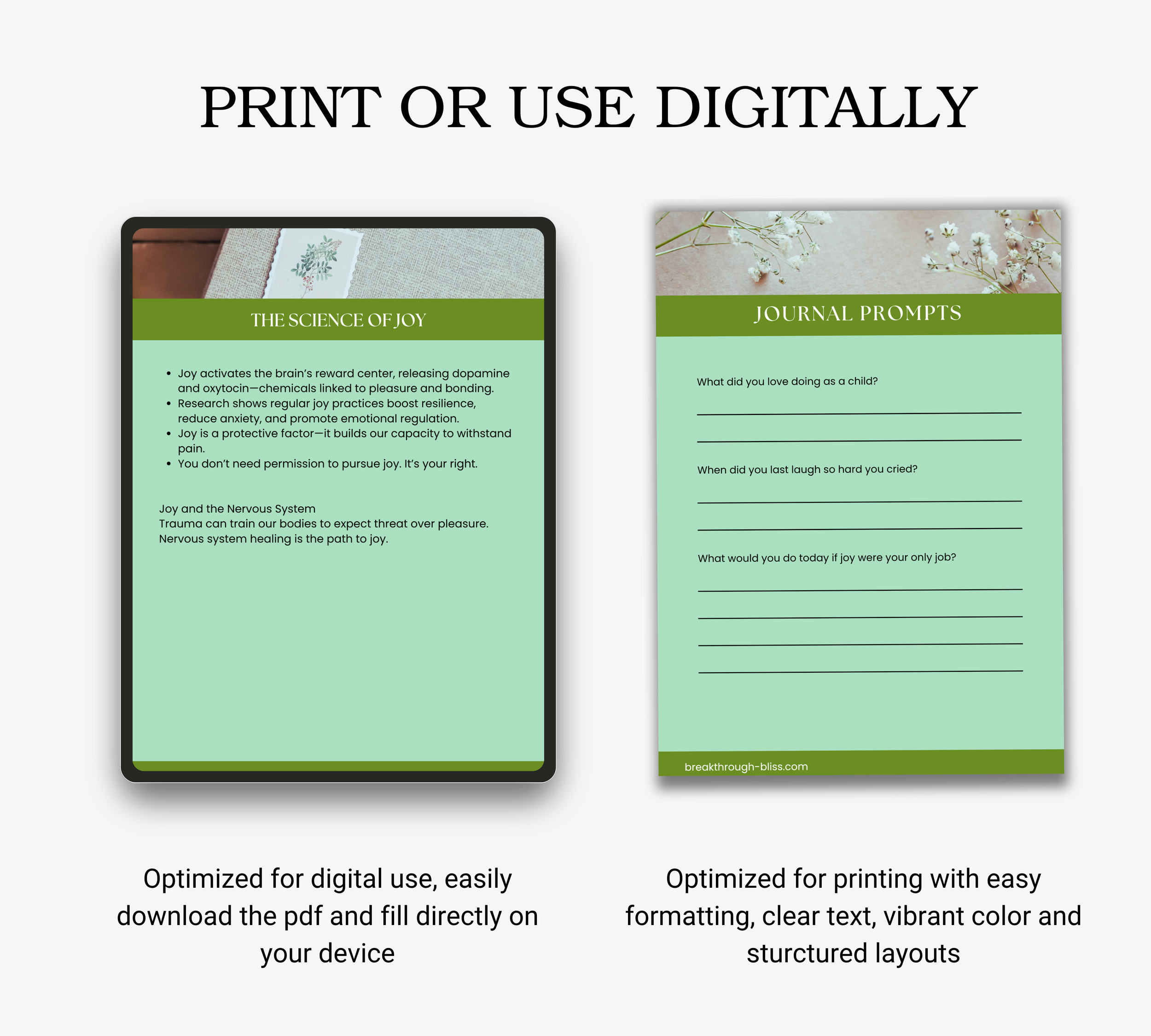 Image 3 of 8
 Image 4 of 8
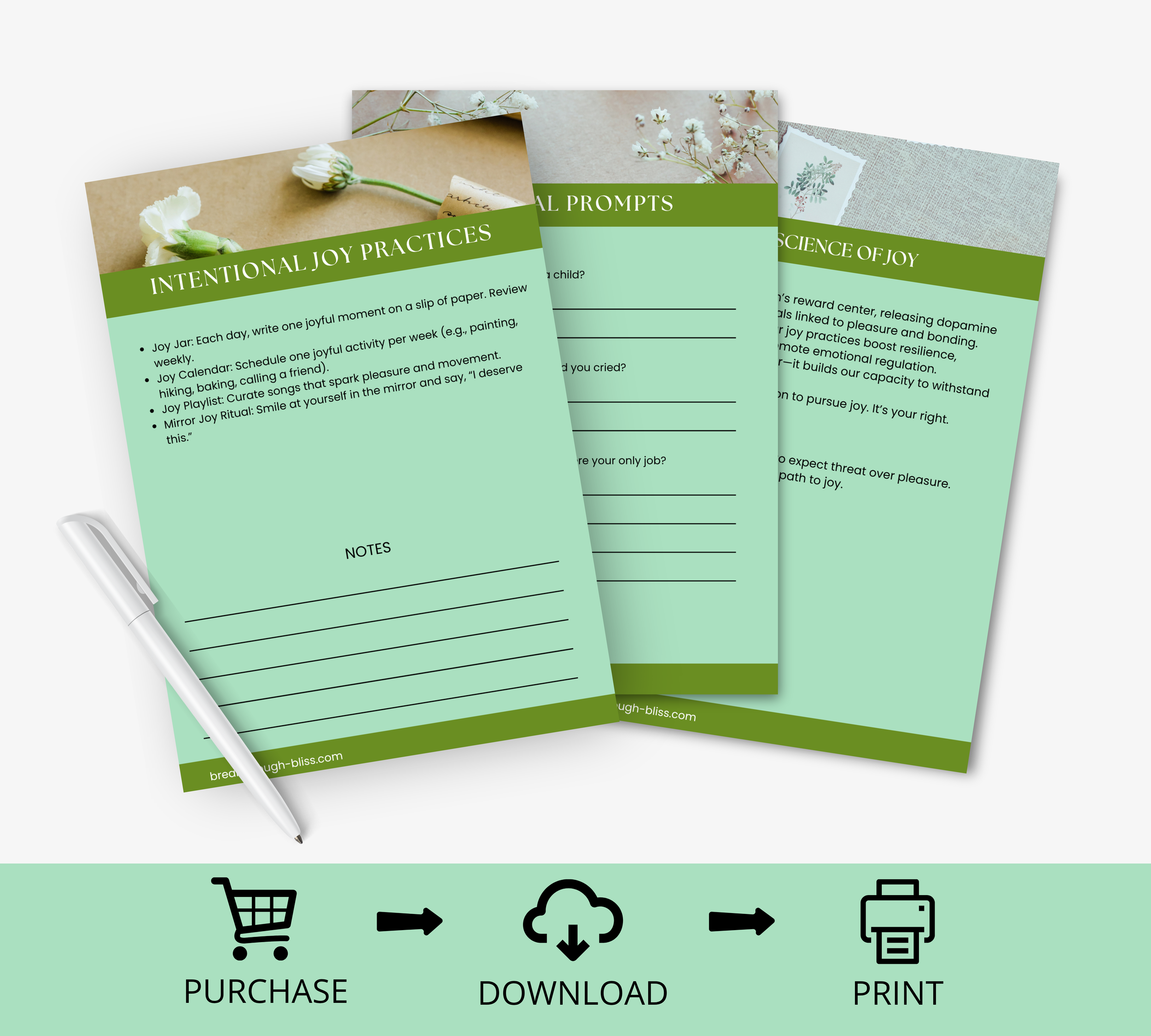 Image 5 of 8
 Image 6 of 8
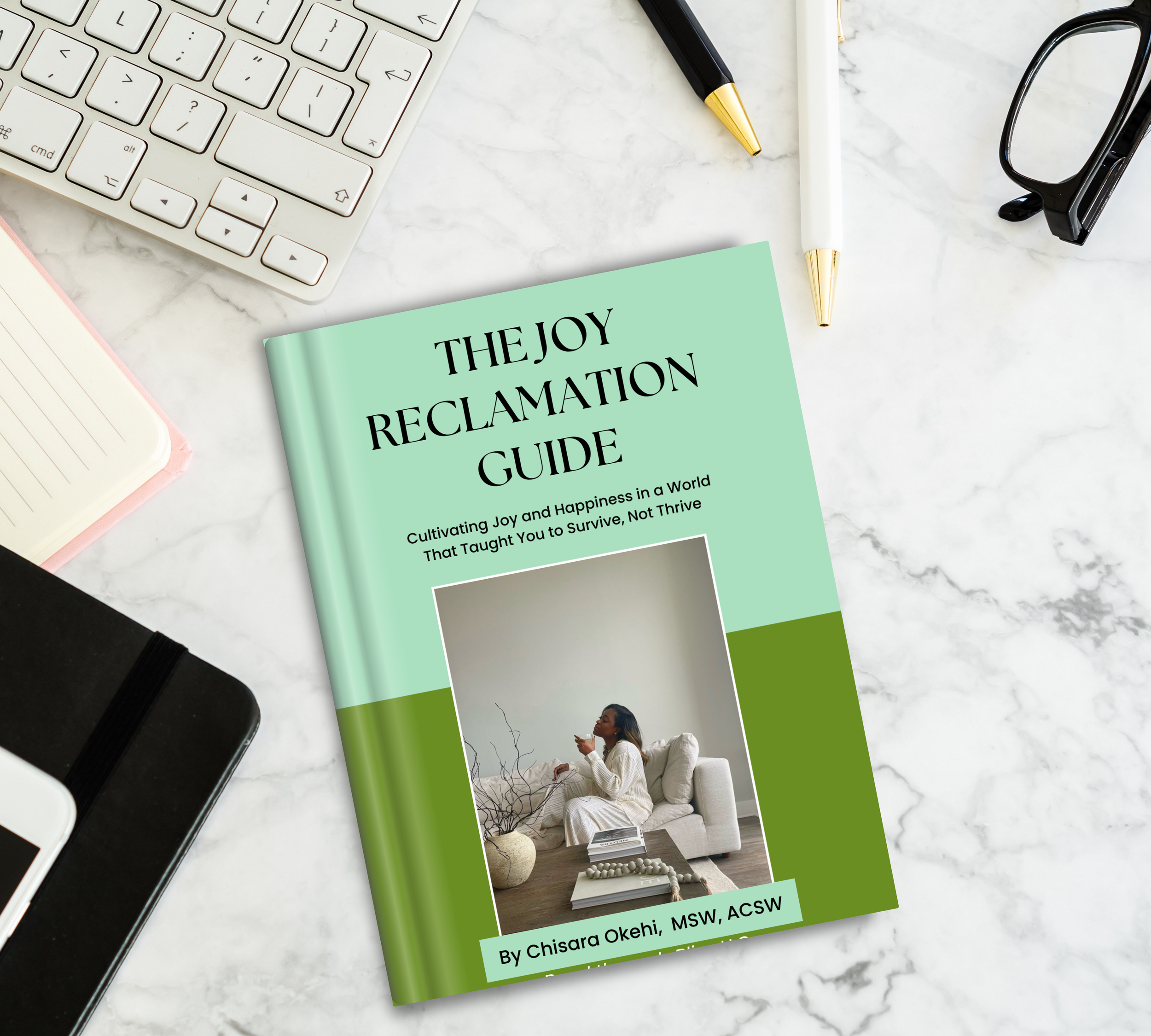 Image 7 of 8
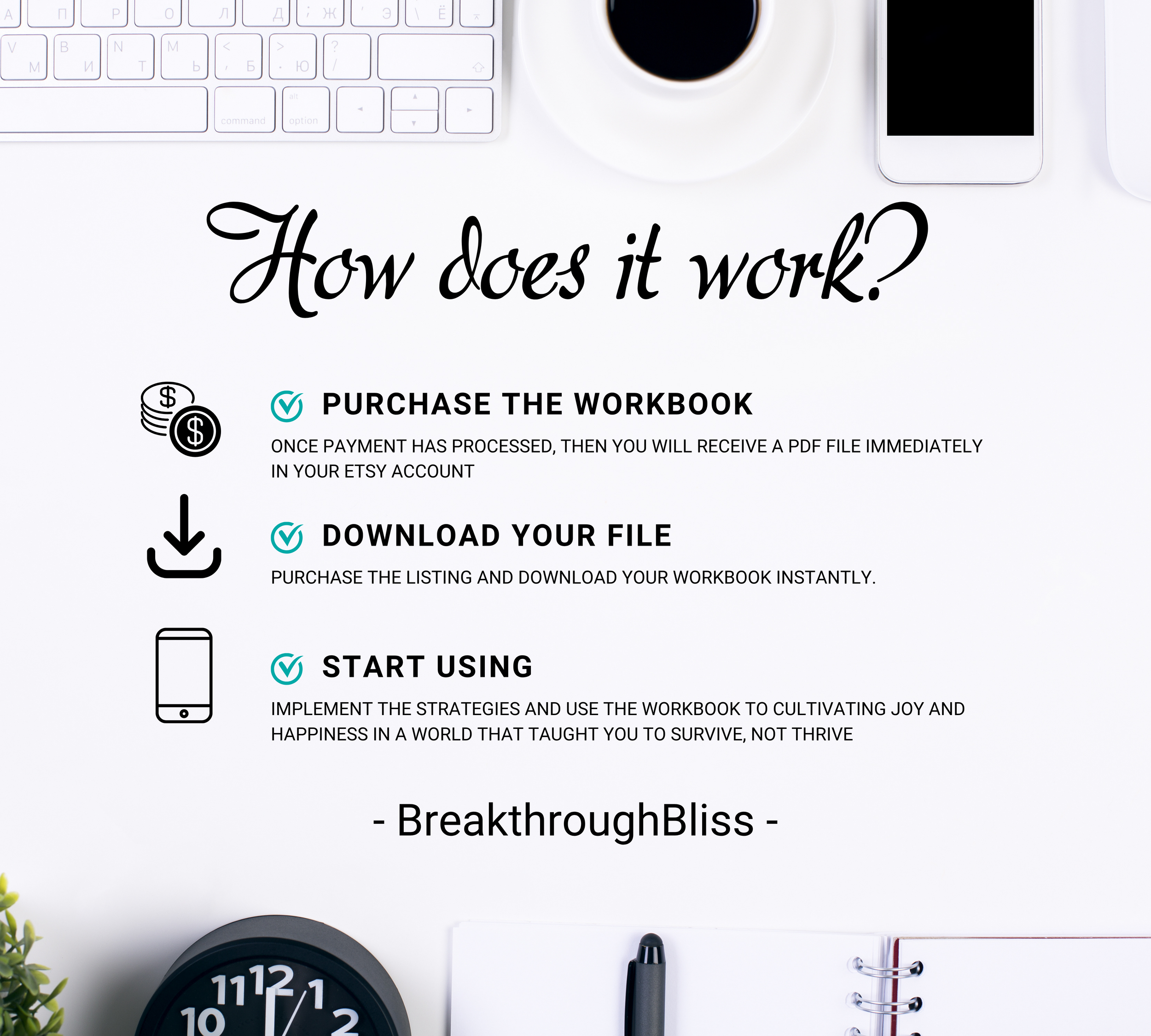 Image 8 of 8